Diana and Friends Experience History Through Music Giveaway–$700+ Value!

If you follow me on Facebook, you’ve probably seen me talking about the upcoming release of Experience History Through Music by Diana Waring.  We’ve been blessed to be a part of helping launch these books and CDs.  The music is so well done (and, unlike so many children’s CDs, enjoyable even for adults to listen to), and the stories behind the songs offer a fascinating way to learn about American history.  I’ll be sharing a complete review in a couple weeks, but I wanted to make sure you heard some fun news right away!

Diana and Friends Giveaway

To celebrate the release of Experience History Through Music, I am joining members of the Diana Waring Launch Team for an amazing giveaway. Friends of Diana have joined in and as you can see, someone’s homeschool is going to be greatly blessed!

Here’s what you could win!

From Diana Waring Presents

american history -- never this funExperience History Through Music – set of 3 books with CDs ($50/set) Diana Waring Presents is about to bring back into print the BEST folk music you have ever heard, combined with the fascinating stories they represent in American history!   The Experience Music Through Historyseries includes: America – Heart of a New Nation, Westward Ho! – Heart of the Old West  and Musical Memories of Laura Ingalls Wilder. The musicians are amazing, every instrument is real, lots of great vocalists, and more toe-tapping music than you can imagine! The books tell the stories behind the songs.  Together, they bring American history to life through it’s music!!With fascinating history books and toe-tapping folk music CDs, American history has NEVER been this fun!

EncouragementCollage2Encouragement for Homeschool Moms Collection ($25) Every mom needs that word of encouragement from someone who has been there, who has grownup children and can speak with assurance about the journey. Homeschool moms have an extra portion of the journey to navigate, and often wish for an extra voice that will offer direction but without nagging or prodding. Diana Waring has that voice.


From A Journey Through Learning

Logo New 300 trans$50 Gift Certificate $50 to spend in the A Journey Through Learning store, applicable toward any digital download purchase.


From Homeschool Legacy

westward ho I 300x400Westward Ho! Part I ($19.95) Load up your wagon! Discover the extraordinary times of adventurous frontiersmen and brave pioneers as you travel cross-country along the Erie Canal,  Oregon Trail, and even “remember the Alamo” in Westward Ho Part I.

Westward Ho! Part II ($19.95) Continue the exciting saga begun in Westward Ho! Part I as you journey with the forty-niners, ride the rails of the Transcontinental Railroad, experience life on the prairie, and discover the exciting era of cowboys and cattle drives in Westward Ho! Part II.


From Knowledge Quest Maps

HardcoverCD_ecover_croppedMap Trek: Atlas and Outline Maps of World History ($55) Map Trek is a historical atlas plus outline maps that allow you to teach geography alongside history. This is a resource that any homeschool parent can use with brilliant success, even if you don’t remember a thing from your history or geography classes in public school.


From Home School Adventure Co.

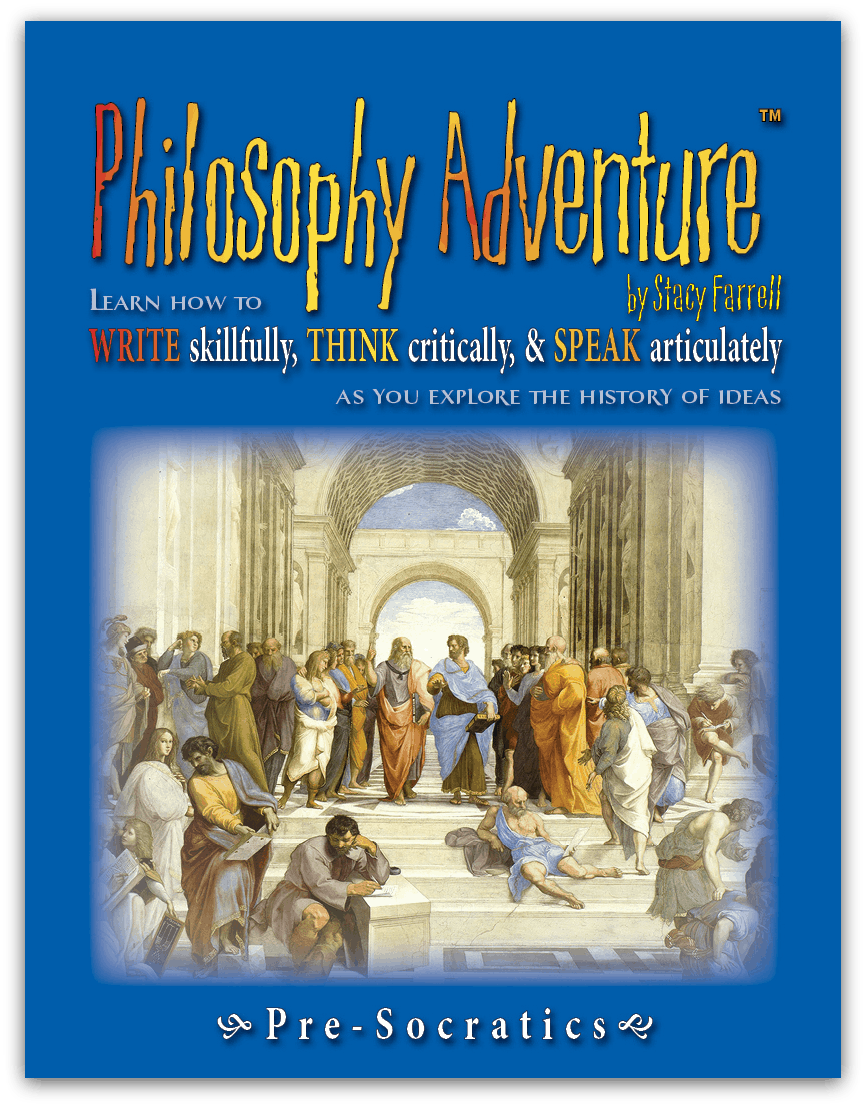
PAPS-R-96dpi shadowPhilosophy Adventure™ Digital Download ($39.95) Philosophy Adventure™ is designed to help students 6th-12th grade cultivate and defend a biblical worldview by teaching them how to write skillfully, think critically, and speak articulately as they explore the history of ideas.


From Heidi St. John (The Busy Mom and Real Life Press)

fpf3-bundle-covers-180x180Firmly Planted Family Devotional Digital Volume 3 ($39) The Firmly Planted Family Series is divided into ten-week studies and is your key to making sense of the Bible—even if you’re learning right along with your children. Each lesson provides a core idea, a simple narrative, memory verses and discussion questions for children of all ages. And the companion student workbook is filled with age-appropriate, full-color, reproducible activities for children of any age!


From Raising Real Men

RRM-Mom-Dad-300x295Free Registration to Boyhood Boot Camp or Boot Camp 9-12 LIVE webinar series (winner’s choice) plus Mom & Dad Special Raising Real Men (Book for Mom to read in the bathroom + AudioBook for Dad to listen to on the commute) ($62-69)

My-Beloved-and-My-Friend-Cover-Border-201x300Free Registration for Marriage Retreat Online plus His & Hers Special of My Beloved and My Friend: How To Be Married To Your Best Friend Without Changing Spouses (book + audiobook), ($65)


From Institute for Excellence in Writing

logo$50 Gift Certificate $50 to spend in the IEW store, applicable toward any purchase.


From The Old Schoolhouse Magazine

ST-Affiliate-300x300_zpsb38aa8aeSchoolhouseTeachers.com ($139) A one year membership to the curriculum arm of The Old Schoolhouse Magazine. Nearly 100 classes for Pre-K to High School, taught by expert teachers, and lots of extras including the Schoolhouse Planners, Schoolhouse Expos, monthly free ebook downloads and more.

Big-Book-14-Cover-113013-e1392516063206The Old Schoolhouse Magazine 2014 Print Book ($15) Be encouraged, enlightened, and educated with the all new 2014 Annual Print Book published by The Old Schoolhouse® Magazine.You’ll get a year’s worth of homeschool support in almost 300 pages in this full color one-of-a-kind print magazine for homeschoolers, by homeschoolers. This is a magazine you’ll refer to again and again.


From Writing with Sharon Watson

the-power-in-your-hands-front-coverThe Power in Your Hands ($53.96) With The Power in Your Hands: Writing Nonfiction in High School, they’ll learn what they need to know for high school and will be prepared for college writing.

69276_1454187188126914_157492202_nWriting Fiction [in High School] ($35) Are you raising the next C. S. Lewis or Jane Austen? Help your students develop their fiction-writing talents with Writing Fiction [In High School]: Bringing Your Stories to Life.


To enter the giveaway, use the Rafflecopter below. Residents of the U.S., age 18 and older only. Other Terms and Conditions can be found in the Rafflecopter.

a Rafflecopter giveaway

Post-Convention Reflections

Today I’m taking a break from my usual Mentoring Monday post, in order to reflect on the Great Homeschool Convention, which we attended at the end of last week.  I’ve been to other conventions before so I had some idea of what to expect, but this was my first GHC, and it definitely won’t be my last.

Great Homeschool ConventionsConventions can be a little overwhelming.  Between the lengthy list of workshops and the huge exhibit hall full of resources, there are a lot of decisions to be made.  Rather than trying to take in a little bit of everything, I spent some time thinking about my priorities and preferences for what home education looks like in our family.  That helped me really narrow down where I wanted to spend my time.

Here were the main things I decided I wanted to learn about/focus on:

  1. Living books rather than text books
  2. Resources that fit with the history and/or science we have planned for this year
  3. Parenting resources to help keep peace in our home

By keeping those three things foremost in my mind, it was relatively easy to choose which workshops and exhibits I wanted to visit.

Workshops

Beautiful-Feet-BooksI attended several inspiring workshops.  I think my favorites were the ones taught by Rea Berg from Beautiful Feet Books.  As she discussed some of the wonderful children’s literature out there, I was reminded of why I wanted to stick with a living books approach to history rather than textbooks.  As I’ve been planning our upcoming school year I’ve been starting to lean toward Mystery of History.  I think it has a lot to offer (I attended one of Linda Lacour Hobar’s workshops as well), and I think we will use parts of it, but I want to make living books our core.

Eric and I both enjoyed listening to Kirk Martin from Celebrate Calm.  He talked about how to help our kids be accountable for their choices and to keep our own emotions calm as they face the consequences of their own decisions.  I ended up buying the CDs from all his sessions (as well as a few others) so we can really absorb what he was talking about.

I also attended a workshop on teaching gifted children, which I found eye-opening.  When I was in graduate school I did quite a bit of research on gifted education, but it was all classroom centered, so some of what I was focusing on doesn’t apply in a homeschool setting.  I suspect my 4-year old is quite gifted, and I got some good suggestions for books to read to help me understand a little more about how that affects the way he learns.

Exhibit Hall

Okay, I have to start this section with a confession: I spent more than I had planned to.  However, I don’t regret any of my purchases because they are all things I know we are going to use a lot.  I’m actually quite excited about them still!  Here are the treasures I found in the exhibit hall:

  • Books!  For the children I bought two books to go along with our science studies this year, several wonderful historical books and other children’s classics from Beautiful Feet, and a train book for Nicholas’ birthday in a few months (one I’ve been eyeing since Ian was a baby).  For myself I bought momsMoms Raising Sons to be Men by Rhonda Stoppe.  (I overheard someone talking about how good her workshop had been, and when I went over to her booth to find out more, it only took me about 20 seconds to decide to get the book.  Looking forward to reading it soon!)
  • Accountable Kids kits and book to help our kids learn to manage their time and responsibilities around the house.  I was so excited to learn about this program!  It incorporates several things I’ve been trying to figure out how to implement in our home, and I think my kids are really going to like it.  (Review coming soon!)
  • Microscope.  This might seem like a bit of a splurge since Ian’s only in 1st grade, but I figured we’re going to want one eventually and there are several lessons we’ll be able to use it for this year in science, so I thought I’d take advantage of a great convention price.

There were some fantastic deals available, and I missed out on several things I would have purchased because I took too long considering them.  Some books I was able to find on Amazon for close to the same price, and others I’ve put on my wish list for when I see them on sale again.

I’m only about halfway through the piles of catalogs and literature I picked up from various booths, but I’m hoping to have those cleared away by the end of the week.

Overall we had a great convention experience.  I love the Great Homeschool Convention’s family registration that allowed all of us to go together.  I did sign our older boys up for the children’s conference, and they spent most of the sessions in there, but it was so nice to have the freedom and flexibility to bring them into the workshops with us.  It meant our family was able to get through the three days without being separated for too long, which can really make things difficult for the little ones.  I’m glad this is going to be an annual convention from now on.  Elijah’s already asking when we can go back.  My wallet is thankful that it’s over, but we’re all looking forward to future conventions!


Our Home Library

    Educating the WholeHearted Child: Chapter 7

WholeHeartedOh, what a dangerous chapter this was!  I have been building a personal library since I was a child, and the Clarksons have now helped me justify my compulsion to fill our home with good books.

“A growing home library is absolutely essential for a WholeHearted Learning approach to home education… Just remember, books are an investment.  They have intellectual asset value.  They are nonconsumable curricula that can be used with every child, then with their children, and passed on to succeeding generations.  Books are worth it” (page 128).

AMEN!

Some things in Educating the WholeHearted Child have challenged me as they exposed my inadequacies.  Others have encouraged me as I see things I am already doing (or at least heading toward).  But I doubt there will be any other standards in this book that I even come close to attaining to the extent that I have already met their challenge to build up a family library.

So rather than a lengthy post, I thought I’d share some pictures.  These are only the “tidy” book areas, because as Margaret E. Sangster said (quoted in the sidebar on page 130), “To the genuine lover of books no house is completely furnished which has not a good many of them, not arranged formally in one room, but scattered all over the house.” There are several baskets (and stacks) that didn’t make it into any pictures.

If you’ve been following my blog for a while, you’ve probably already seen our main library in the school room:

P1020364

But I don’t think I’ve ever shared what our living room wall looks like:

P1030349

That still wasn’t enough space for me so here’s the entrance to our guest room:

P1030355

And a little back corner of the guest room (with 2 shelves in double rows, and yes, that box on the right and the one underneath it are filled with books, as are the cupboards under the shelf):

P1030356

And of course the kids have little mini-libraries in their room.  Here’s Arianna’s shelf (minus the books in her bed):

P1030351

And here’s the boys’ shelf:

P1030357

I know it doesn’t look like much, but that’s because their beds usually look like this:

P1020429

I cleared out Ian’s bed this week and it had to have had at least 30 books in it.  But I’m not complaining.  I’m too busy bursting with pride!  Yes, it’s a sickness, and I think it’s contagious.

I love this sidebar quote from Henry Ward Beecher on page 129: “No man has a right to bring up his children without surrounding them with books, if he has the means to buy them.  It is a wrong to his family.  He cheats them! … It is a man’s duty to have books.  A library is not a luxury, but one of the necessities of life.”

I don’t know if I’d go that far, it’s nice to know I’m not alone in my desire to surround my children (literally) with good books.  And I don’t think there’s any danger of them being cheated in this way!

Each Mentoring Monday I share my reflections on what I’ve been learning from my “paper mentors.”  I am currently joining in a book discussion of Educating the WholeHearted Child by Clay Clarkson (with Sally Clarkson), so my Monday posts are all being sparked by things I’m reading in this fabulous book!


We Choose Virtues (Crew Review)

WCVCollage
I think character education is one of the most important jobs a parent has, particularly when our children are young.  Laying a foundation of virtue in the early years will help children grow up knowing how be people of good character.  We Choose Virtues has created a line of products to help parents and others who work with children equip them for a lifetime of wise choices.  I was blessed with the chance to review the Parenting Cards and the pdf products in the Download Bundle from this wonderful program.

What is It?

We Choose Virtues is a “Character Education System” ideal for families and classrooms with children ages 3-18.  There are several products in the WCV online store that can be used to implement the program in addition to the ones we received, but the Parenting Cards and the Download Bundle are a great way to use the program at home with children ages 3-11.

The set of Parenting Cards includes 13 colorful 8.5″x5.5″ cards which describe 12 specific virtues: Content, Self-We Choose Virtues ReviewControlled, Perseverant, Patient, Obedient, Kind, Honest, Helpful, Gentle, Forgiving, Diligent, and Attentive.  (The remaining card illustrates the concept of virtues changing us into something more beautiful, like a caterpillar becoming a butterfly.)  The Parenting Cards make up the core of the program in a family setting.

Each card has several components:

We Choose Virtues Review(Front Side)

  • name of the virtue
  • catch phrase
  • antonyms for the virtue
  • Bible verse (We used the cards with the NIrV translation, which includes verses from both the Old and New Testaments.  Cards are also available with the KJV translation using only verses from the Old Testament.)

We Choose Virtues Review(Back side)

  • Virtue User Challenge
  • Saying about the virtue
  • Instruction on “What to say after ‘I’m sorry'” when this virtue hasn’t been demonstrated
  • Teachable moments for families (ideas for activities or discussions)
  • short story about the featured “Virtue Kid” (who was pictured on the front side)

Although the Parenting Cards could be used successfully alone, the items in the Download Bundle are helpful additional tools for teaching the virtues.  The Download Bundle includes the following items:

  • Teacher’s Handbook (This guide seems to be geared more toward classroom teachers, though parts of it could also be helpful for homeschool families.  I printed it out thinking it would be beneficial to have it easy to grab and use, but it’s really not something you need to have in your hand as you’re teaching your children.  In hindsight I would probably just read it on the computer orP1030323 tablet.)
  • Family Character Assessment (see below)
  • Kids of VirtueVille coloring pages
  • Butterfly Award (to recognize the transformation you see as your children choose to exercise the virtues)
  • Sing-along-Song sheets (lyrics to help you and your children remember the teachings about the virtue, set to familiar tunes)

How We Used It

The first thing we did to introduce the program was fill out the “Family Character Assessment” with Ian (6) and Elijah (4).

virtues1

I printed out two copies, and then Eric and I went through it with them one night during our family Bible Time, reading the brief description of each virtue and rating the boys on each one together.  I was surprised at how self-aware they were regarding their strengths and weaknesses, and this was a really special time with them.  Afterward we prayed with together and asked God to help us all to grow and learn as we work through our new We Choose Virtues program.

After that I used our morning Bible Time (part of our school day) as the main instruction time.  Arianna (2) joined us each morning during this time.  We followed the suggestion in the Teacher’s Handbook for taking 10 minutes each day to discuss the virtues.  I chose one card at a time and then spent several days focusing on that one.  (The recommendation is to spend a week on each virtue, followed by review as necessary.  Because we didn’t have 12 weeks for this review, I chose to spend 2-5 days on each one, depending on how familiar my children were with it already, so we could get through most of them.)

Here’s a general outline of what we did for each virtue:

Day 1

We read everything on the front of the card.  I had each child repeat the virtue (“I am content”) and the catch phrase (“I have my ‘WANTER’ under control”).  Then we looked up the Bible verse in the ESV (since that’s the translation our family uses most of the time and what we use for memorization).

Sing-Along Virtue SongsDay 2

We reviewed the virtue and the catch phrase.  Then I turned the card over and we discussed the section on “What to say after ‘I’m Sorry'” and learned the song for that virtue.  (I printed the song sheets out and put them in my notebook with the Teacher’s Handbook, but some children might enjoy coloring these pages as they learn.)

Day 3

We reviewed the virtue and the catch phrase.  Then I read about the character in “The Kids of VirtueVille” section on the back of the card, and we discussed how they reflected that virtue.  I gave the kids the option of coloring the page about that kid.

Day 4 (and beyond)

We reviewed the virtue and the catch phrase.  Then we focused on the “Virtue User Challenge” or one of the “Teachable moments for… families” and read a story or poem from The Book of Virtues by William J. Bennett.

I found that 4 days worked best for us.  Any longer and it just seemed like I was harping on them.  (Obviously we didn’t stop pointing out ways they were demonstrating or failing to demonstrate a particular virtue just because we’d moved on to another one.  I just mean we didn’t spend extra time in the morning talking about it.)

Ian - We Choose Virtues

My virtuous pirate. Is that an oxymoron?

We displayed our Parent Cards in a pocket chart in our school room, where they were highly visible and the kids could take them out to examine.  (I laminated them right away so they’d be able to withstand frequent handling.)

The kids really caught on to the catch phrases.  One day Elijah came in after playing with some neighborhood children, and he was sad that the only person who’d been willing to share with him was his brother.  (Way to go, Ian!)  I sympathized with him and then encouraged him to remember how it feels when someone won’t share with him, so he can be sure to share with other people so they won’t feel so sad, saying, “Treat others the way you like to be treated.”  He suddenly smiled and said, “That’s what it means to be kind!  That’s what our card says.”

What We Liked

My favorite thing about this program is the title: We Choose Virtues.  I love that it helps children take responsibility for their behavior.  Even before starting this program we talked a lot about good character traits, but I felt like We Choose Virtues really shifted the way I discuss them with my children.  They have a choice as to what kind of person they want to be.  I can teach them what all these concepts mean, but only they can choose to take ownership of them and decide that they want to be known as a person of virtue.  “Even a child is known by his actions, by whether his conduct is pure and right” (Proverbs 20:11).  We’ve spent a lot of time discussing that verse.

I also really like the catch phrases.  They both help describe the virtue in a succinct way the children understand and help them remember.  I can’t count how many times we’ve quoted the phrase for obedience: “OK, whatever you say, I will obey, right away!”  We say it cheerfully, in a kind sing-song manner, and it’s more of a silly, fun way of reminding them what we expect, rather than nagging and scolding.  I’ve been amazed at how it has helped even one particularly sour-faced child melt into a smile and choose to obey.

Although it took me a while to get used to, I like the format of the Parenting Cards.  It is helpful having everything about each virtue in one place without having to turn to a specific page in a book.  The character illustrations and the bright colors made them appealing to everyone in the family, and I often caught the children stopping by our pocket chart to look at them and read through the front sides on their own.

What Could Have Been Better for Our Family

I would have preferred more structured guidance in how to present each virtue. The outline I shared above about how we used the Parenting Cards each day was something I came up with after floundering about for the first couple weeks.  I kept poring over the Teacher’s Handbook hoping for a bit more instruction, but it was more geared toward classroom use and even then it didn’t lay out even a sample idea of what to do each morning.  This is probably because We Choose Virtues isn’t meant to be a curriculum but a “Character Education System” that is implemented throughout the day, but the lack of direction caused me more than a bit of stress as I tried to figure out what I was supposed to be doing.  I could have used a little more advice on how to get started.

Some of the Virtue User Challenges were way beyond what I could reasonably expect of my children.  For example, the challenge for Obedient said, “The entire family should try to go the whole day doing everything you are asked to do with a smile!”  My 6-year old could probably make a decent attempt at that, but I would be setting my 2-year old and incredibly strong-willed 4-year old up for failure if I set that challenge before them.  These little years are a season of training toward goals like that, but there’s a lot of hard work to put into it before they get there.  That kind of thing has to be something they choose to do on their own, and they’re just not to that point yet.  Even if they had the desire to try to be completely obedient, I think an hour would be sufficiently challenging for them.

Overall, however, I found this to be a rich program with more ideas than we could use in just the introductory weeks.  I anticipate pulling out these cards over and over again in the years to come, repeating discussions and utilizing various ideas as my children grow and mature.  It is so helpful to have a reference point for them, and it lends authority to our instruction when they see the virtues described so clearly on the cards.  I enjoyed our introduction to We Choose Virtues so much I decided to purchase their Upgrade to a Family Kit, which has some additional items to help make the virtues a more pervasive part of our family culture.

Just the Facts

Interested in try finding out more about how to use We Choose Virtues with your family?  Read more Crew Reviews to see what it looks like in other homes (including materials for children ages 12-18).  Then check out the products I’ve shared about (and more!) in the We Choose Virtues Store:

Parenting Cards ($38.49)

  • includes pdf download of the Family Character  Assessment. (The cards are also available in Spanish!)

Download Bundle ($7.99) containing these items, most of which can also be purchased separately:

We Choose Virtues is offering two special promotions right now.  Through the end of June, enter promo code BIG50 to save 50% off their set of 12 “Kids of VirtueVille” posters (11×17).  They are also having a special Back-to-School promotion this June-August.  Enter promo Code BTS20 for 20% off anything in the WCV Store! (One promo code per order.)

 Connect With  We Choose Virtues on Social Media:

Click to read Crew Reviews
Crew Disclaimer

LearningPalette.com (Crew Review)

Learning Wrap-Ups Review

We try to make everything a learning opportunity in our house, so I’m always keeping an eye out for educational games for my kids to play, both physically and on the computer.  Last fall a friend introduced us to the Learning Palette from Learning Wrap-Ups, and Ian was so fascinated with the game, I ended up getting one for our house.  The game consists of a base with colored disks and sets of cards that can be changed out to practice various math or reading skills.  The player uses the disks to mark the answers to 12 questions on each card.

Because each set of cards is purchased separately, we’ve only had a chance to use the ones for 1st grade math, but recently I was given a chance to review LearningPalette.com, which is basically a virtual version of the same game.  With the Full Online Family Subscription for all levels of Reading/Math Palettes instruction (up to 5 uses for a full year), we had a chance to see how much more there is to the Learning Palette.  The online version of the game allows one to access every math and reading card available, which provided an opportunity to not only explore some of the other cards available to use with the palette, but also to compare the online experience to playing with the physical game.

What’s Included

So much is included with the online program!  There is a section for math as well as one for reading, each broken down into levels to correlate with grades in school  (e.g. “Basic” is appropriate for Kindergarten, Level 1 with 1st grade, etc.).

 Math (Basic, Levels 1-5)

When the student first logs in, they select math or reading, followed by the appropriate level.  Then they’ll need to choose which category they’re going to work in.  For example, in Level 1 there are six categories (each with 12 cards):

  • Numeration Step 1 – Numbers 0-10 Intro to Addition and Subtraction
  • Numeration Step 2 – Numbers 0-100
  • Numeration Step 3 – Money and Simple Fractions
  • Algebra Concepts
  • Geometry and Measurement
  • Probability and Statistics

LP1

The Basic level has 5 categories (60 cards), but each of the other levels has 6 categories (72 cards).  That’s a lot of math!

Reading (Basic, Levels 1-3)

There are a wide range of reading skills covered over the four levels.  “Basic” has foundational concepts like the alphabet, beginning consonants, and rhyming words.  Level 3 covers things like prefixes and suffixes, reading comprehension, and grammar.

Each of the levels has 5 categories.  We spent most of our time in Level 1, so here’s what we had to choose from:

  • Reading Comprehension
  • Nouns, Verbs, and Adjectives
  • Vocabulary
  • Phonics
  • Blends and Digraphs

LP6

How We Used It

Since Ian (6) was already familiar with the physical Learning Palette, he made an easy transition to the online game.  When this review started, I was planning to use the website mainly with him as a supplement to our regular math program, but the novelty wore off after the first couple weeks, and I didn’t want to push him and have him end up not enjoying it at all.  If it were a choice between using LearningPalette.com and a traditional worksheet (which would probably test similar skills), he’d choose the former without hesitation.  Still, it was more of a lesson than some of the computer games he does, and therefore not necessarily something he’d choose if I gave him game time.  I’ll continue to use it with him sporadically through the summer as a fun math activity to keep things fresh in his mind once we finish up our regular math curriculum.

Elijah (4) was interested in what Ian was doing so I decided to let him play as well.  He hadn’t played the physical game before, so it took him a little longer to figure out how to play.  He started requesting it more frequently, however, so I ended up letting him be our main user.   He’s much more drawn to anything mathematical, and the whole system was interesting to him because it was so neat and orderly.  I really like having learning activities he can do on his own while I’m working with Ian, and this is perfect for that.  He enjoys it so much that when he’s used up all his computer time for the day he often asks if he can get out the physical Learning Palette.

Both boys spent a lot more time on math than reading, mostly because that’s usually where I directed them (though occasionally they chose a reading card on their own). They are both good readers and I prefer to just let them pick up on reading skills as they spend time with good books so we avoid worksheet-type activities unless there’s a specific concept I think they need to spend extra time practicing.

What We Liked

It was wonderful having access to every card available for the Learning Palette!  I also found it simpler for the children to use than the physical game.  When they get out our Learning Palette I have to watch them carefully to make sure the cards stay together in their sets and in the correct order.  The online game made it easy to find the card we were looking for and to click to the next one as soon as they completed it.

I liked the way the menu showed them what they had already completed and whether it was done correctly. The yellow circle shown below was one where Ian had mixed up two of the answers, and I appreciated that that he was still able to go on to the next card without having to redo it.  If it were something I felt he really didn’t know I would have had him do the card again, but in this case it would have been a waste of time so I was glad he could just move on.

LP4

I also really liked how easy it was to view progress reports for each student.  The reports not only showed which cards had been completed and how many questions had been answered correctly, but also how long it took the student to complete each one and averages for both the scores and times.  For example here’s a report from a session where one of them had worked on several cards.

LP5

What Could Have Been Better for Our Family

Although the session progress reports were helpful, the main report page didn’t make much sense to me.  On the session report above, for example, I can see the scores for the 6 cards he completed just on that one day.  Yet the main page only shows 5 cards completed total.  It wasn’t that big a deal to me, so I didn’t spend a lot of time trying to figure it out, but it is a bit confusing.

Our first time trying to log in it took a long time to load the card we’d selected.  After several tries without ever getting to see the card I told Ian to just choose another one, and when he did it loaded fine and he never looked back.

Another problem we encountered in the beginning was that at first glance there wasn’t an obvious way to get back to the menu to choose another card.  This is what the screen looked like:

LP2

It turned out I wasn’t seeing the entire screen, though there wasn’t a way to scroll down, so I didn’t realize that until Elijah accidentally adjusted the size of the picture. (Somehow he manages to do this frequently, which was very frustrating until I learned how to fix it with CTRL +!)  The size of the disks and the palette didn’t change, but if you notice on the right-hand side there is now a set of very helpful buttons!

LP3

Perhaps it wouldn’t be an issue if we had a larger monitor, but the kids do their work on various laptops, and it would have been nice to be able to see the whole screen, especially the “menu” and “next card” buttons without having adjust our settings.

Despite these minor issues, we have enjoyed using Learning Palette.com and will continue to use it as a supplement to our other math and reading work.

Just the Facts

LearningPalette.com is suitable for children working at a Kindergarten through 5th grade level for math, and a Kindergarten through 3rd grade level for reading.  It is available as a 1-year subscription.  The price varies according to how many users accounts you want to purchase ($25 for just one user, $60 for 2-5 users, and even deeper discounts for schools with more students to sign up.) They are also offering a special homeschooling family discount of 20%.  Just enter the coupon code “HOMESCHOOL” at checkout.  (This discount is also good on the main Learning Wrap-Ups site, so be sure to check out their online store!)

Connect With  Learning Wrap-Ups on Social Media:

  • Facebook: https://www.facebook.com/LearningWrapUpsInc
  • Twitter: https://twitter.com/2010Facts

Click to read Crew Reviews

Crew Disclaimer

5 Bible Basics (Going Beyond Stories)

P1030319

When I first starting following Jesus at age 14, I knew little about the Bible beyond the stories of Adam and Eve, Cain and Abel, and Noah’s Ark.  (My mom had once bought me a children’s Bible storybook and that was about as far as I got.) Everyone at church knew so much more about the Bible than I did, and I wanted to start reading the Bible regularly, so I asked two friends to help me pick one out.  That experience was the beginning of my Bible education.

I’m not quite sure what I was expecting as far as choices: paperback, hardcover, or leather, maybe?  I remember being slightly overwhelmed as the two of them discussed different translations and finally decided I should get an NIV.  “A what?”  Maybe they explained the concept, but if so I don’t remember.  I just took their word for it that that was what I should get.  I found a plain NIV Bible and promptly took it home to begin reading.

I think I made it to Leviticus before I got discouraged.  I told my friends about it on Sunday and one of them said the Old Testament might be too much to tackle at first.  He recommended I skip ahead to the New Testament and start with Matthew.  That was my first Bible lesson: this big book has two major divisions, and it could still make sense if I didn’t read it completely in order.

I enjoyed my journey through Matthew, but when I start in on Mark I got confused.  I’d start into a story and then realize I’d already read it back in Matthew.  Why was it in here twice? Then I hit Luke and many of the stories were there yet again!  What was wrong with this book?  Why did it keep repeating the same stories?

5 Things Everyone Should Know About the Bible

My confusion could have been cleared up with a few lessons in Bible basics.  Somewhere along the line I got a better grasp on things and eventually I not only read the Bible but also studied it with great enthusiasm.  In the beginning I felt like my friends all knew so much more than I did about the Bible, but as I started to learn more, I realized even those who had grown up in the church were often lacking a basic understanding of the Word of God.

I want to be sure my children grow up with a solid foundation when it comes to knowledge of the Bible.  As I’ve looked into different ways people use the Bible in homeschooling, it seems like much of what I have found consists of teaching Bible stories.  I think that’s great when the children are little, but I want to be sure we go beyond just stories and teach our children both some basic facts about the Bible as well as knowledge about how to study it to gain a deeper understanding.

Here are 5 Bible basics that helped us get started:

Bible page1. 66 books in 1.  The Bible may come bound as one book, but it is actually a whole library of books by different authors written over a span of hundreds of years. (Knowing this would have helped me so much as I went through the gospels!)  I created this blank Bible library bookshelf notebook page to help teach this concept.  (The only label on it is the title at the top; everything else can be written in by hand.  Feel free to adapt it to make it work for you!)

  1. 2 major divisions.  Those 66 books are divided into two groups: The Old Testament and the New Testament.  The OT tells the story of how mankind was separated from God and how God used one nation, Israel, to set in motion a plan to bring about reconciliation.  The NT tells about how God’s plan was carried out and how all people can experience that reconciliation.  As a new believer, these basic descriptions could have helped me a lot in finding my way around!

  2. Multiple genres.  Some of the books of the Bible tell stories. Some list laws.  Some have poems.  Some describe prophetic visions.  It’s important to know what type of book you’re reading in order to fully understand it.

  3. It’s helpful to learn the names of the different books in order.  It makes it SO much easier to look things up.  I have found the best way to do this is through songs.  I learned both Testaments from the My First Hymnal: 75 Favorite Bible Songs CD I bought years ago, so that’s what I’ve taught my kids, but there are lots of different songs out there that teach the names of the books of the Bible.

  4. Translations abound.  The books of the Bible were originally written in Hebrew (OT) or Greek (NT) (plus a small amount in Aramaic), so all English Bibles are translations.  That’s why sometimes we’ll hear verses read slightly differently depending on which translation the speaker is using.  (We use primarily the ESV in our home, as well as spending some time in the KJV.)

These are all basic things that we’ve taught our kids from early on.  We have a chance to reiterate these concepts frequently, so at least the older boys have a fairly good understanding of them.  I’m looking forward to Ian’s 1st grade year, when we’ll be able to dig a little deeper as we study the Scriptures.

Coming Soon: My review of the program we’ll be using as a framework for our Bible studies for this coming school year!


More Stories with Peter Rabbit (Crew Review)

Kinder Cottage ReviewI think most of us are familiar with the classic story of Peter Rabbit and the mischief he got into when he disobeyed his mother and wandered into Mr. McGregor’s garden.  If you love children’s literature you’re probably aware that the British author of the story wrote a few other books that included this beloved character.  However, if you are like me, you may not know that the American publisher of the story, Henry Altemus, also published several sequels featuring Peter (written by Duff Graham), which are far less familiar.  Thanks to Kinder Cottage Publishing, these classic stories have been republished for a new generation to discover and enjoy.

Kinder Cottage ReviewThe entire series, including the original story, includes ten books ideal for children ages 3-9.  We were given copies of Peter Rabbit at the Farm and Peter Rabbit and the Little Boy to review, and if you and your children enjoy reading about Peter Rabbit, I would encourage you to check out these books (and the rest of the series) on the Kinder Cottage website.  Both books are rather small 64-page hardbacks (5×7 inches). I was a little surprised at how diminutive they were, but it didn’t detract from our enjoyment of the stories.  In fact, it made them easy for little hands to manage on their own.

I read the books to my 3 older children and then left them out on our coffee table to see how popular they were.  Over the next couple weeks Elijah (4) read one to Arianna once, but then he pretty much left them alone.  Arianna (2) brought one to me to read to her again and enjoyed flipping through them. I saw Ian (6) pick them up a few times to read on his own. I think enjoyed the stories the most, probably because he is the most familiar with Peter Rabbit.

P1030130 P1030134

The Kinder Cottage website only provides samples from each book rather than summaries, which I would have found helpful, so here are my own brief summaries of the two books we reviewed.

Kinder Cottage ReviewPeter Rabbit at the Farm

In Peter Rabbit at the Farm, Peter is off looking for mischief and meets up with various animals around Mr. McGregor’s farm.  Sometimes Peter is helpful and wise; other times he’s just looking for fun.  The story doesn’t have any real conflict and is basically just a series of interactions between Peter and the animals around him.  At the end of the book, Old Mother Rabbit tries to extract a promise from him to be good and not run away again, but Peter has already fallen asleep, leaving the reader to assume there will be more adventures with the mischievous little rabbit.

Kinder Cottage ReviewPeter Rabbit and the Little Boy

In Peter Rabbit and the Little Boy, Peter once again disobeys his mother and heads off in search of adventure in forbidden territory.  Along with his cousin Jack-the-Jumper, he gets into various sorts of mischief, eventually meeting a little boy who plays with the two rabbits and offers them a ride home with his grandfather, who turns out to be Mr. McGregor.  The book is definitely a product of another era, with a character called the Scissors Man who asks the little rabbits if they’ve been obeying their mothers and then frightens them with the story of how he once cut off the thumb of a little boy who wouldn’t stop sucking it when his mother told him.  I was glad we didn’t have any thumb-suckers listening to the story, but my children didn’t even seem to notice, instead focusing (as I’m sure the author intended) on the message that children need to obey their mothers.

Kinder Cottage ReviewOther Crew Members have been reviewing the rest of the series, so if you and your children want to spend more time with Peter Rabbit be sure to visit the Schoolhouse Review Crew blog to find out more about the other titles.  Then visit kindercottage.com, where each book sells for just $4.00 (a great deal considering the $12.95 price listed on the back covers).  If you want the whole set, they sell all ten books for $30.  Plus Kinder Cottage is offering readers of The Old Schoolhouse Magazine and TOS Crew Reviews a chance to save even more.  Enter coupon code TOS to receive a 20% discount off the product price on their website.  After Ian saw the list of titles on the back he asked if we could get the rest of the series, and with that kind of a discount, I may end up getting the rest of the series to give him as a gift!

Click to read Crew ReviewsCrew Disclaimer

Go and Make Disciples… Starting at Home

Educating the WholeHearted Child: Chapter 6 (part 2)

WholeHeartedIn the years before I got married I spent countless hours with other people’s children as both a classroom teacher and children’s ministry worker.  I felt driven by a passion to disciple the children God brought into my life, but there was always a certain amount of frustration for me.  No matter what I did during the hours I had with those precious souls, in the end I sent them home to those God had called to be the main “disciplers” in their life: their parents.  I longed for the day when I would have my own children to guide and influence.

Jesus didn’t have a casual relationship with his disciples where he met with them for an hour a week, or even an hour a day.  They spent pretty much every hour together.  Sometimes he verbally instructed them.  Sometimes he modeled the ministry of the kingdom of God.  But no matter what method he was employing, they were constantly learning and growing more like him.

When Jesus ascended to heaven, he left his disciples with instructions to follow his example, only now they were going to be the teachers.  “Go therefore and make disciples… teaching them to observe all that I have commanded you” (Matthew 28:19-20).  That commission has been passed from generation to generation.  Our pastor often characterizes it as “disciples making disciples.”  As parents, the most obvious place to start fulfilling this commission is with our children, who spend almost every hour with us much like Jesus’ disciples did with him.

This is my passion.  It is what I longed for during those years in classrooms and children’s ministry.  Now that I have my own children, I want to use the hours, days, months, and years to disciple them as fully as I am able.

“It is natural and normal for children to look to you for their moral, social, spiritual, and intellectual direction and to want to stay with their parents until they are grown.  It is unnatural and abnormal to believe others should or must raise your children for you and to divide your child’s heart between home and family and other authorities” (page 111).

I’m always a bit taken aback when people express surprise and awe at my wanting to keep my children home with me rather than sending them off to school for someone else to take care of.  “I’d go crazy,” they say.  “You must be Supermom!”  The idea of children spending a large part of their day away from their parents in school has become so normal in our society that we might not even stop to question it.

However, think about how God created families.  Nowhere in Scripture is there a basis for educating children apart from home and family.  I’m not Supermom.  I’m just walking out motherhood the way it was originally designed, spending each day with my children, instructing them and training them in the things God has taught me.  I am so thankful for the ministry He has given me at home, discipling these four precious souls and teaching them how to follow Jesus.

Each Mentoring Monday I share my reflections on what I’ve been learning from my “paper mentors.”  I am currently joining in a book discussion of Educating the WholeHearted Child by Clay Clarkson (with Sally Clarkson), so my Monday posts are all being sparked by things I’m reading in this fabulous book!

Curriculum vs. Framework

Keep CalmMy husband has often marveled at my inability to follow a recipe.  I tend to view recipes as a starting place, and 99% of the time I make at least one adjustment based on what ingredients I have, our family’s likes/dislikes, something I think sounds good, etc.  Usually I’m pleased with the results, but occasionally I learn a lesson about what doesn’t work.  Still, I love the freedom of using my kitchen as a place for creating something just for our family.

It must be a personality thing, because I have a very similar approach to homeschooling.  Just like with recipes, I rarely follow any curriculum exactly the way it is intended.  Consequently, I am reluctant to spend money on an all-inclusive curriculum, knowing that I’ll probably just tweak it anyway.  Thankfully, there are some wonderful free resources available online, and even though I will probably never follow one to a tee, they help me build a sort of “framework” that provides structure to our homeschool year while allowing me plenty of flexibility as far as what I will include to complete our educational experiences.

Originally my plan had been to follow Ambleside Online (one of the best free resources out there, in my opinion), and we’ll still be looking there for a lot of guidance.  I love the richness of their literature suggestions, and reading through their information about the Charlotte Mason method over the last few years has really shaped my educational philosophy.  Our plans for school will primarily consist of booklists for each subject (using various forms of narration to ensure that the material in those books is absorbed).  Still, there are things about AO that I want to adjust for our family.  If I only had one or two children, I think I would feel fairly comfortable following most of the AO curriculum as written (as well as I follow anything), but I think for our larger family I would prefer to keep everyone together for as many subjects as possible.

Building Around 4-Year Cycles

In my search to find the best way for our family to learn together, I was most drawn to 4-year cycles.  They’re popular with “classical” homeschoolers, but I wouldn’t necessarily put myself in that category because there are many elements of classical education that don’t excite me at all.  The idea of cycles, however, has intrigued me since I first read about it.  I know I have trouble grasping the big picture until I’ve seen everything laid out at least once and then can start making connections and putting together the pieces of the puzzle in my mind.  Being able to go deeper with the same material as the children get older makes a lot of sense.

With four children (and possibly more someday?), there are other benefits as well.  Rather than trying to help each child through an individual history track based upon their grade level, they can just join in our family history lessons as soon as they are ready, and I don’t have to worry about them missing something because within 4 years they’ll have been exposed to all the major events of history and will get to go through it again to pick up on things they might not have caught at a younger age.

I plan to use cycles not just for history but for other subjects as well.  If we can touch on all the major areas of science in 4 years and then repeat that cycle, by the time they finish 8th grade they should have a pretty good foundation.  (I imagine as they reach high school they’ll step away from what the family is doing in order to spend more time on particular classes.)

With Bible, I’m planning a 3-year cycle, allowing us to not just read through the Bible but have time for more in depth study as well.  (I’m very excited about the main resource I’ve found for our school Bible study… more on that coming soon!)

Ditching the Recipe

There are plenty of curricular options that follow 4-year cycles, but as I said before, I’m not very good at sticking with someone else’s plan.  For some subjects I may use a “spine” (either a book or a curriculum that can serve as a backbone for an entire year or more), but I’d prefer to just loosely work our way through various books, videos, and other resources that fall into our flexible framework so that we don’t end up getting too tied down to the idea of completing a curriculum at the expense of spending a little extra time on the things that pique my children’s interest.

Thinking this way especially helps me with long-term planning.  When I come across resources I think would be a good fit for our family, I don’t have to worry about trying to piece them all into a cohesive plan.  Instead, I just figure out where they fit into our cycle and look forward to getting to use them.

I’ll be sharing a little more about my plans in these individual subjects and what that will look like as we head into 1st grade over the next few months.  There’s a whole world to learn about with my children, and I’m so excited about taking the next step of this journey with them.


Looking to the Bible with Frog and Toad (Crew Review)

Progeny Press Review

When I was offered the chance to review a literature guide from Progeny Press, I didn’t know much about the company.  The list of available titles included many of my favorite children’s books, Progeny Press Reviewhowever, so I figured they were a company with which I should get acquainted.  I decided that Ian would probably enjoy Frog and Toad Together by Arthur Lobel (a Newbery Honor book), so we printed out the downloadable e- guide and got started.  I wasn’t sure what to expect, but the experience ended up being an absolute delight.

Progeny Press puts out study guides to go along with children’s literature for students ranging from lower elementary though high school.  In addition to exposing children to wonderful books, what makes these studies particularly worthwhile is their uniquely Christian perspective.  I remember enjoying the Frog and Toad books as a child, so I looked forward to sharing them with Ian.  When we first read through some of the books in the series, it didn’t occur to me to go any deeper than the simple meaning of each story.  However, this study guide turned a classic children’s storybook into a chance for Ian and I to spend time digging in the Bible together for God’s eternal truths regarding things we face in everyday life.  As we read through the simple stories in Frog and Toad Together, we experienced them on a deeper level as we looked at what the Bible has to say about the theme of each story.

P1020928

What’s in the Study Guide

The first few pages of the guide include a note to the instructor about how to use it, followed by a brief synopsis and a page about the author.  Then the study begins with a section of “Before-you-read Activities,” which consists of a discussion about friendship and what the Bible says about it.  Then it goes through the book chapter by chapter.

We went through a story at a time, first reading the chapter and then spending a day or two going through the study guide for that story.

P1020924

I won’t go through the entire book, but each chapter had some valuable lessons.  I loved the way we were pointed back to the Bible with each one.  We spent time looking at Scriptures on things like letting God direct our steps, how He cares for us, how to handle temptation, trusting God when we are afraid, and considering others above ourselves.

In addition to Bible study and thought-provoking questions, there were also suggestions for fun projects like planting seeds, baking cookies, and singing songs to memorize related Bible verses.

P1020935

At the end of the study there were pages to extend the lessons more with extras like creating a Venn diagram comparing the characters Frog and Toad with real frogs and toads and a word search.  There were also suggestions of other books to read, either by the same author or about similar subjects.

The Frog and Toad Together Study Guide is intended for children in grades K-2 and is available as a printed workbook, or digitally as a download or on CD.  (All formats are sold for $11.99.)  Much of the guide consists of questions with space to write down the answers, but I didn’t want Ian to be limited by his fine motor skills, so I let him tell me his answers and then I would write them down.

Both Ian and I really enjoyed going through this study together. He liked it so much he kept telling me to get the study guide for some of his friends in our homeschool group so they could do it too.  I definitely plan to purchase more of the study guides to use with other books we will be reading in the future.

Check out Progeny Press on their website or social media pages:

Facebook –  https://www.facebook.com/progenypress
Twitter –  https://twitter.com/progenypress
Pinterest – http://www.pinterest.com/progenypress/
YouTube –  https://www.youtube.com/user/ProgenyPress


Click to read Crew ReviewsCrew Disclaimer

« Older Entries Recent Entries »