
The Math Map Lesson 14: Constructions

Since Classical Conversations released The Math Map in 2023, I’ve gone through the 30 lessons at least 5 times in various forms, as a tutor, a teacher at home, and “lead learner” trying to understand concepts I never learned in school myself. This year, as I prep each week (taking my Challenge class through it on Community Day, in addition to using it at home with my four youngest children), I’m writing a post on each lesson, sharing things I’ve found helpful or offering some suggestions in hopes of making it less intimidating to those just getting started.
Tips for Lesson 14: Constructions
This lesson is unique among all the others in The Math Map. It’s a great way to finish out the semester because it’s very hand-on. My artistic students especially enjoy working through some of these constructions. If you’re going through TMM at home, this is a great week to work through the lesson pages together with all different ages.
There are a few things you’ll need to have on hand to be successful this week. (They’re used repeatedly in the lesson pages.)
- Patty Paper NOTE: Most patty paper I found on Amazon is waxed. The only benefit of wax paper is that you can really crease the folds and make a mark. However, my students have gotten frustrated trying to write on the patty paper I bought initially. After much searching for something unwaxed I found these, which say parchment paper (though it’s confusing because it also says wax paper). We had much better luck using pencils on them. (If you do get waxed, sometimes one side is easier to write on than the other.)
- Double Edge Straight Edge (DESE) i.e. a ruler. (Other rectangular objects can work. The point is that you’re using it to draw straight lines, sometimes parallel lines, rather than using it to measure.)
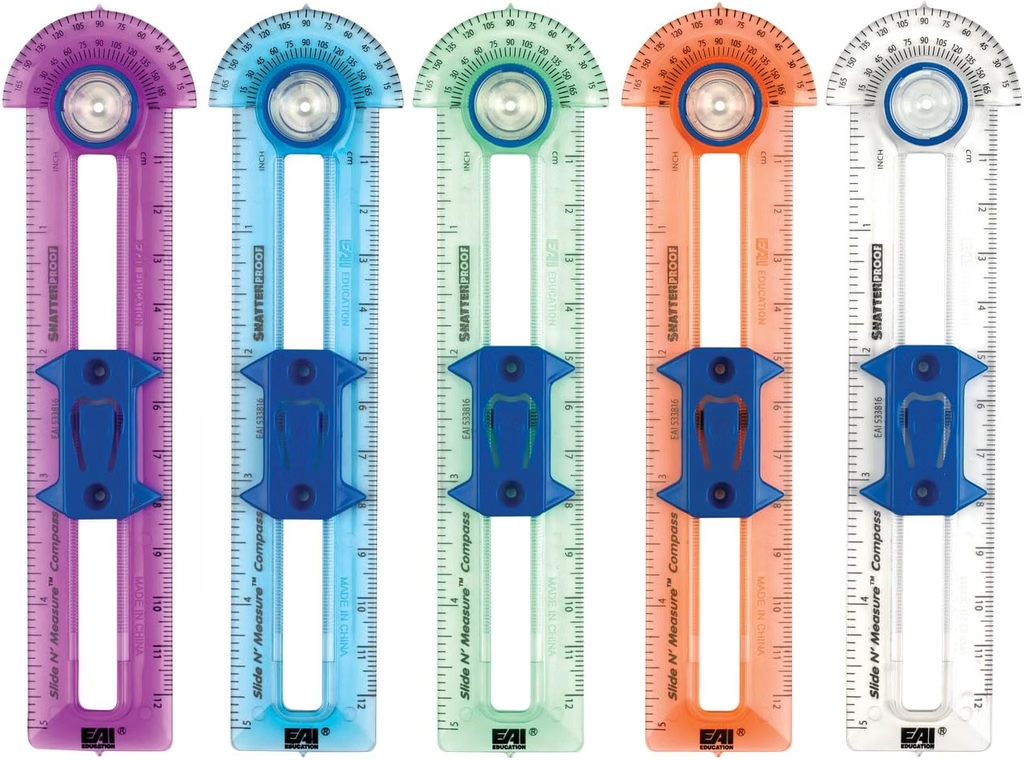
- Compass NOTE: While I appreciate giving students the opportunity to get familiar with a traditional geometry compass, my Challenge A students got a bit frustrated when using them. After my Challenge II students also struggled last year, I ended up buying these “Slide N’ Measure” compasses, which seem much easier to use. I like having both kinds available.
- Invention (i2 page) This page looks really different than other weeks. It’s a good introduction to the tools the students will use on the lesson pages. If you’re a Challenge tutor and you’re not sure how to discuss this class, I recommend watching Dr. Gilpin going through it in this cued Book Club discussion.
- Memoria and Arrangement (i3 page) There is probably a lot that is familiar on this page. It’s a good opportunity for helping students recognize how much they already know.
- Charts This week’s charts aren’t vital to understanding the lesson pages. I look forward to discussing them with my Challenge III or IV students after years of going through The Math Map, but I wouldn’t spend a lot of time on them in the first few years.
Other help as you explore Lesson 14:
- I have found The Math Map Book Club to be a great resource, but there are so many episodes out there, it can be a bit overwhelming. If you just want to focus on this specific lesson, here’s my YouTube Playlist of Book Club videos about Lesson 14: Constructions (with episodes from 2024 to the present — I can’t find the 2023 episode for this lesson anywhere).
Just for fun:
- If your students enjoy the “Line Art” on p. 4, the American Mathematical Society has some fun patterns for creating curves using straight lines (either drawing with a ruler or stitching with thread.) Their page also has some links for further exploration of this idea.
