Author Archives: Deanna

Wrapping Up Week 1 (2016-17)

weekly wrap-up
 Our first week of school for 2016-17 was a success!  Things feel really different this year, and I’m not sure what the main factor is.  Part of it is just the kids getting older and being capable of more.  Part of it is having more kids actually doing school work (mostly just Ian and Elijah, but I’m also trying to do a little with Arianna).  Then there’s the fact that we’re going to be starting up Classical Conversations next month.  I also feel like I’ve done more planning than usual and have a clearer idea of what I want to cover this year.  All of these things combined to make school seem new and fresh, and while that’s a great thing, I was also a little uncertain as to how things were going to go this week.

The biggest change I made was creating a daily schedule.  In the past I have just had a list of what I wanted to get through each day, and I allowed Ian some flexibility in how we got through that list.  But now I have four kids needing time on our main computer (more on that in a minute), plus three kids who need to practice the piano, and without scheduling who was going to do what when, it just wasn’t going to happen.  So here’s I came up with for the four older kids and myself (downloadable doc you can adapt):

Daily Schedule pic

The only part of this I didn’t make happen this week was getting the boys to stop and read quietly for half an hour in the afternoon.  Because our neighbors are out wanting to play, my kids want to get through their work as quickly as possible, and since they’ve been choosing to read a lot in the evenings to earn prizes in our library’s summer reading program, I’m not going to enforce this right now.  If their reading habit continues, I’ll cut that out of the schedule permanently and just let it happen naturally.

Okay, so once that structure was put in place, getting through the things I had planned went fairly smoothly!

Preschool

Corduroy ActivitiesArianna will be turning 5 in the fall, missing the cut off for starting Kindergarten in California.  Yet she’s eager to learn and wants to have some school work to do alongside her older brothers.  So I’ve made time during our mornings to make sure she and Nico both get some sort of “preschool” experience.  I’m trying to read to them each day and give them some fun preschool activities like I did back in the early days of this blog when Ian was little.  I already shared about the fun we had this week with the Corduroy books, so I’ll leave it at that.

Most of Arianna’s “academic needs” are met during the half-hour of computer time I’ve given each of her, which she spends on Reading Eggs, Math Seeds, and More.Starfall.com (all subscriptions that I have found to be well worth the cost).

Reading Eggs Math Seeds Starfall
She also started trying out Talking Shapes, on which I’ll be writing a review in a few weeks.

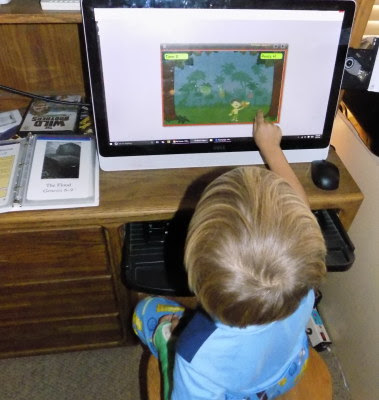
Nico loves watching Arianna on the computer as well as playing the same things himself.  He’s not quite 3, so his progress on Reading Eggs and Math Seeds is slow, but he enjoys playing the games over and over, so I’m happy to let him have his turn on the computer as well.  (We don’t have an iPad, but our computer has a touch screen, so he’s able to use it without needing to figure out a mouse.)

Then because Arianna wants to start writing, I also have her doing a little bit of copywork (10-15 minutes max each day) to make sure she’s learning how to form letters correctly.

Elementary

Like many homeschoolers, I have found that grade levels don’t mean a whole lot when it comes to meeting my kids’ needs.  Ian (8) is officially a 3rd grader this year, and since Elijah (6) can keep up with academically in almost everything (the exception being how much writing he can handle), I’ve decided to just have them do most of the same work this year, even though we’re calling Eli a 1st grader most of the time.

Bible

This is the one subject where the boys are taking different paths.  Ian started The God Puzzle by Valerie Ackermann, a workbook focused on how the Bible all fits together as one seamless story.  It has 36 lessons, each broken up into several sections.  This week I walked through Lesson 1 with Ian, but I’m hoping that once he gets more familiar with it, he’ll be able to do most of it on his own.  He liked the last assignment, “Talk to God about it,” because I sent him outside and told him he had a half-hour of quiet time to pray and journal about it on his own.

God's Puzzle
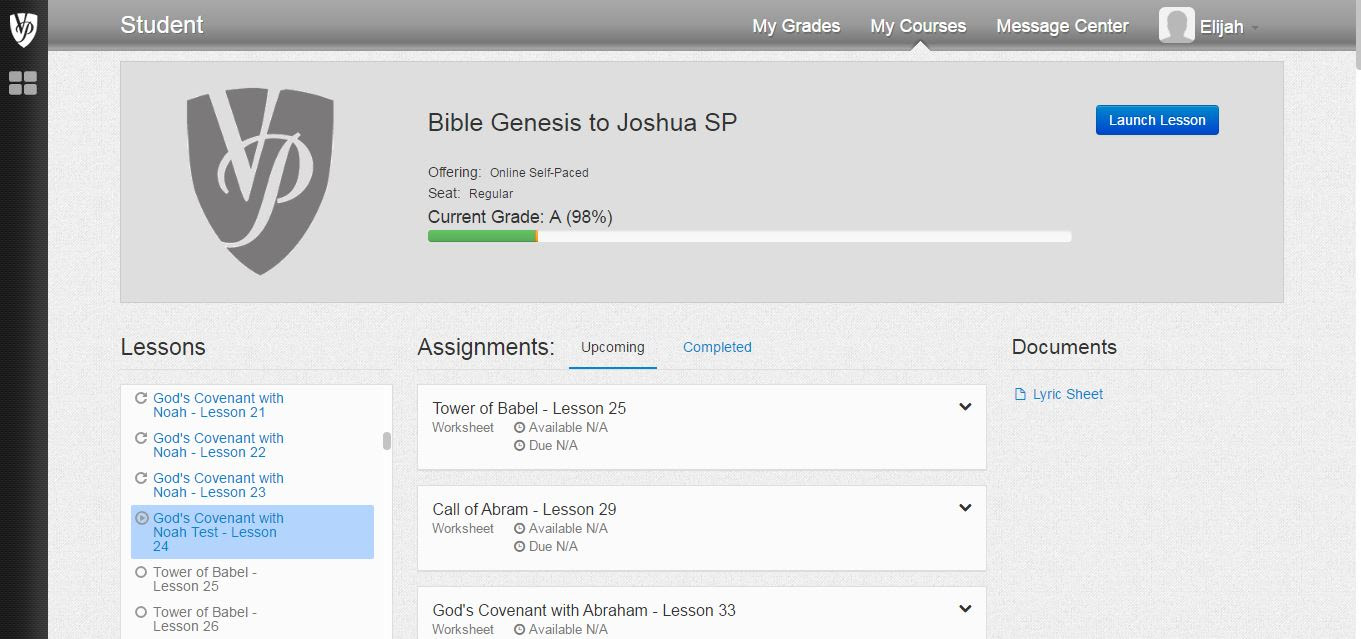
Elijah continued going through his Veritas Press Self-Paced Course on Genesis – Joshua, learning about the Call of Abram.  He really enjoys these lessons, both the content and the fact that he can do them all on his own.  During family Bible time in the evening he loves sharing with Daddy about things he’s been learning.

Math

They both got off to a good start in Teaching Textbooks 4, as well as jumping back into fact practice on XtraMath.org.  I also had them go through some tests on CTCMath to assess their strengths and weaknesses.  For the most part, though, they are both getting their math done independently.

History

We’re starting American history this year, using The Light and the Glory for Children: Discovering God’s Plan for America from Christopher Columbus to George Washington by Peter Marshall and David Manual as a “spine.”  This week we read the first two chapters, which talked about Christopher Columbus.  I like the way he was presented in a balanced way.  Too often I’ve seen him portrayed as either a benevolent hero or as a a typical evil white man bringing nothing but misery to the native people living in the New World.  Marshall and Manual talked about how at first Columbus wrote about his desire to spread the gospel, but also about how pride and greed tarnished his legacy in the end.

Along with our reading, the boys watched an  interactive map of Columbus’ journey online, marked the journey on a map (I used one from the YWAM unit study on Columbus we reviewed last year), and watched several videos afterward, which provided some good material for discussion.

  • Columbus and the Great Discovery from Learn Our History (24:49, my kids love this series)
  • Vintage Cartoon Introduction (5:29, politically incorrect, perpetuates some of the myths about Columbus, but still had some good information)
  • Christopher Columbus: What Really Happened?” (5:39, focuses on the negative things Columbus did, while acknowledging the importance of his role in connecting the Old World with the New World; provided good balance to the previous video)

Columbus

Biography

Adoniram Judson coverThis year I want to read lots of inspirational biographies with my kids, so we started off with Adoniram Judson: A Grand Purpose from YWAM Publishing’s “Heroes for Young Readers” series.  Judson and his wife were the first American missionaries overseas.  The book covered his early years when he doubted God’s goodness after his sister died, then talked about how he came back to God and ended up going to Burma, where he translated the Bible and helped spread the gospel in spite of governmental opposition.

We did most of the activities in the Heroes for Young Readers Activity Guide for Books 9-12, which has coloring pages, games, songs, and puzzles to go along with these books in the series.  The kids also enjoyed looking at pictures from my own trip to Burma/Myanmar several years ago.

Adoniram Judson

Writing

Spelling is something Ian needs to practice continually, and I’ve found that he needs to get that practice in a fun way or else the time we spend on it is pretty much worthless.  For now, I’ve got both boys using both Read Write & Type and the spelling activities in Essential Skills Advantage, alternating between the two each day just to keep things from getting old.  We reviewed both of these programs over the last few months, and they give Ian the repetition he needs while still feeling like he’s “playing” on the computer.  Elijah doesn’t necessarily need the same amount of practice, but I figure it can’t hurt to have him doing the same lessons.

We haven’t done much in the way of grammar up to this point, so this year we’re trying out Fix It! Grammar: The Nose Tree (Book 1) from IEW.  There’s a little bit of teaching to do on the first day of the week, but then it just took a couple minutes for the boys to mark nouns and choose the correct ending punctuation before copying each day’s sentence into a composition book.  They also learned about the homophones there/their/they’re and had to choose the correct one in a couple of the sentences.

FixIt Grammar
The boys learned so much in their writing class last year, and I wanted to keep those skills fresh in their minds while not putting quite such a heavy workload on them.  What I’ve decided to do is have them make an outline each week based on something we read about.  Then at the end of the month, they can choose from those outlines to write a paper.  We’re starting with just one paragraph, and as they get better at it we’ll expand on that.  This week they helped me write up two outlines (on Christopher Columbus and Adoniram Judson) and then they got to choose which one to copy and keep in their notebook for later.

Spanish

We just got a new program to review, Foreign Language For Kids By Kids, so we went through the first few lessons.  All four kids enjoyed watching the videos (some of it was review for the older boys), they participated in the activities as they were able, and then Ian is going through workbook that goes along with the program.

And that was our first week!  We packed a lot into the four days after 4th of July, but I’m thankful for a smooth start, good attitudes, and excitement about what else we’ll be learning this year.

Upcoming Reviews

We’re enjoying several products right now, so watch for these reviews in the next few weeks (may contain affiliate links):

Preschool Week With Corduroy

Corduroy ActivitiesLast year my plan to do more with my preschoolers ended up being a flop, so as we started school this week I was determined to find time each day to be intentional with Arianna (4) and Nicholas (2).  This may look a little different from week to week, but right now that means going back to Before Five in a Row.

For our first book, I chose one of their favorites, Corduroy by Don Freeman.  I had a lot of activities in my file from when I rowed this book with the older boys a few years ago, so we pulled those out. (I don’t want to repeat myself, so check out that post for more ideas!)

Both kids really enjoyed playing with buttons all week.  I have a big jar full of all kinds of buttons, and I let them play with them in egg trays.  Nico just had fun moving them around and exploring, but Arianna chose to sort them by colors.

Corduroy button play  Corduroy button sort
I thought she might like a “sewing” activity since Lisa sews on Corduroy’s button, but I wanted to keep it simple.  I threaded an embroidery needle with string and let her string buttons onto it.  She worked on this for about half and hour and was very proud when she finished.  (I forgot to take a picture and of course the string ended up breaking later.  So we’ll get to do that again another day!)

Corduroy stringing buttons 2 Corduroy stringing buttons 1
As a reminder of our fun week with Corduroy, I cut out construction paper pieces using a pattern I found on Serving Pink Lemonade.  Then Arianna and Nico made their own bears and proudly hung them in their rooms.

Corduroy paper bears
They really loved Corduroy, so we also read A Pocket for Corduroy and Corduroy Lost and Found, and we’ll finish off tomorrow by watching the live action movie of the original story on DVD from the Scholastic Storybook Treasures 2 collection. (I guess this collection is no longer sold new, but the Corduroy DVD is also part of the 20 Animal Tales collection.)

Learning Latin With Stories (Crew Review)

Olim Review
The one thing that has intimidated me about classical education is Latin.  I never studied it myself, which makes it a little scary to try to teach, as much as I can see the value in it.  When we got a chance to review a fun Latin program from Laurelwood Books, I decided this would be an easy way to get our feet wet.  We received the Olim, Once upon a Time in Latin, Reader I and Olim, Once Upon a time in Latin, Workbook I, which use familiar stories to help teach Latin.

About Olim, Once Upon a Time in Latin

The Olim, Once Upon a Time in Latin series has six levels, each consisting of a small softcover reader and a corresponding full-size softcover workbook.  The readers have fairy tales, fables, or Bible studies retold in simple English followed by a Latin translation, and can be used by themselves.  The workbooks, however, are really helpful as they walk the student through each page with various vocabulary exercises, as well as teaching helpful Latin grammar lessons.

Olim Workbook and Reader
The Volume I Reader is 57 pages long and starts with instructions in how to use the reader, a guide for “How to Pronounce Latin,” and a list of Roman Numerals.  Then it contains three stories: “The Three Little Pigs,” ” The Tortoise and the Hare,” and “The Crow and the Pitcher.”  Each story is presented in its in entirety in English with simple illustrations.  Then it is repeated in Latin with a vocabulary key on each page for new Latin words.

Olim Reader
The 80-page workbook really helps students get the most out of each story.  There are 30 pages for “The Three Little Pigs” alone, consisting of translation exercises, matching worksheets, and “Digging Deeper” features, which teach related grammar concepts.  An answer key is in the back of the workbook.

Our Experience

Ian readingI presented the whole subject as if we were working with a code, and we needed to figure out the messages written in Latin, and figure out how to put our own messages back into the code.  Right from the very first lesson, the boys caught on quickly and enjoyed figuring out the Latin words in the reader.

This series is intended for 2nd grade through 5th grade, so I knew Ian (8) would be ready for it.  However, I was pretty sure Elijah (6) could also get a lot out of it even though he couldn’t quite handle the amount of writing in the workbook.

I often found it easier to work with one boy at a time so that they each were able to sit close and study the reader.  Here’s what a lesson looked like for us:

  1. Read 1 page of the story in English
  2. Keeping my finger on the English page, I turned to the corresponding Latin page.
  3. I read through one sentence in Latin, then flipped back to the English page and had the student try to figure out which words “matched” based on similarities to English (necesse-necessary), roots that I could explain (“What do you do at an exit?  You go out.  So ‘exire’ means to go out.”), or words we’d already translated (erat/erant).
  4. After we had read through the entire page sentence by sentence, we pulled out the workbook to work on the vocabulary exercise that went with that lesson.  (I talked Elijah through these, but Ian was able to complete them mostly independently.)
  5. I went through the “Digging Deeper” pages on my own and taught them that material as a separate lesson.

Olim Digging Deeper
Because we are completely new to Latin, this was a learning experience for all of us.  I used the “Digging Deeper” pages in the workbook more like a Teacher’s Manual, and then I presented to information to the boys a little bit at a time using a whiteboard.  It just seemed a little too overwhelming to put a full page of explanations in front of either of them.

Overall, we really enjoyed this first exposure to Latin.  I discovered that Ian has a quick mind for learning languages, and he zipped through these lessons on his own.  I’ll definitely have to consider purchasing the next volume in the series.  If you want to try them out, Laurelwood Books is offering my readers a 20% discount, good until August 15, 2016.  Just enter discount code: blogger121.

Latin and Penmanship {Laurelwood Books Review}
Crew Disclaimer

God Bless the USA!

We’re getting ready to start school on Tuesday, and I’m excited about studying early American History with my children this year.  My prayer is that as they learn more the sacrifices that were made to establish our nation, they will grow to appreciate the freedoms we enjoy, be willing to fight to maintain them, and recognize that the 4th of July is about more than just parties and fireworks (and the start of a new school year for us).

In honor of America’s Independence Day, I wanted to share this beautiful a cappella rendition of Lee Greenwood‘s song “God Bless the USA” by Home Free.  This song always give me goosebumps, and this beautiful cover is just as moving as the original.  The video even features stunning views of Mt. Rushmore in the background, making it a perfect kick-off for 4th of July!

Online Bible Course from Veritas Press (Crew Review)

Veritas Press Bible Review
As much as I love teaching my children, I have found that sometimes I need them to work independently, and Veritas Press has proven to be a great place to turn.  Last year Ian went through one of the online Self-Paced History courses, and Elijah has been eager to have a turn.  He was thrilled to get to try their online Self-Paced Bible course “Old Testament 1: Genesis to Joshua.”

Veritas Bible 6

About Veritas Press Self-Paced Bible Courses

Veritas Press Bible Image
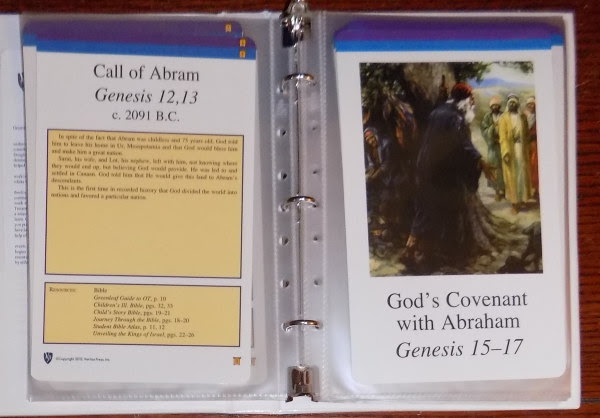
Veritas Press Self-Paced Bible Courses are interactive online lessons that take students through the Bible chronologically.  There are 32 events covered in “Old Testament 1: Genesis to Joshua,” corresponding to the Veritas Press Bible cards.  Each card is covered in 4 lessons (including the quiz at the end). It is possible to do the course without having the physical cards, but I decided to go ahead and purchase them, and I was glad I did.  Elijah liked having something tangible to refer back to, and he used them with almost every lesson.

VP Bible Cards
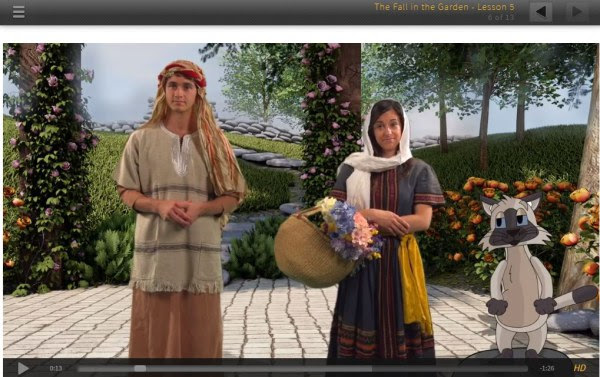
During the lesson two young Israelites, Asher and Abigail, act as teachers or guides, walking the student through the story (with a little help from an animated cat, Teb).

Veritas Bible 3
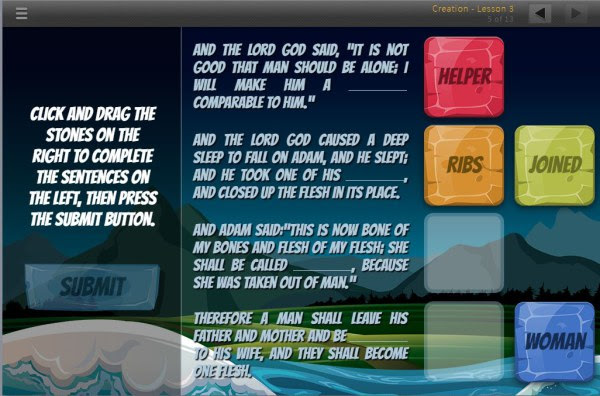
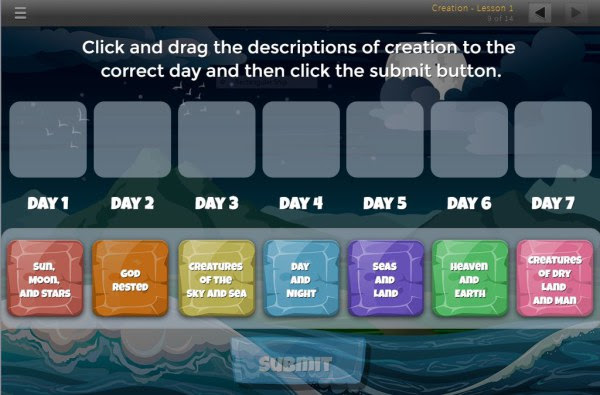
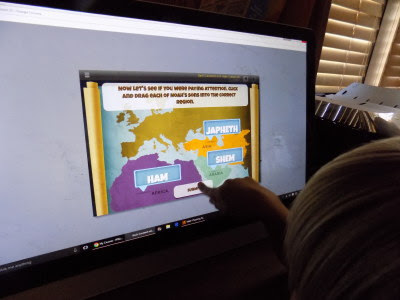
There are lots of different activities, such as putting events in order, matching up definitions, a catchy memory tune that covers all 32 events, and even fun games.  Students do need to be able to read to complete most of the activities, so these courses are intended for 2nd-5th grade.  (Scriptures used come from the New King James Version.)

Veritas Bible 1
Following the classical style, students memorize names, dates, and places, gaining a solid foundation of biblical understanding that will prepare them for delving deeper in the Bible as they grow older and move into more advanced stages of learning.

Veritas Bible 4
Veritas Press Self-Paced Courses are all online.  The student logs in and is automatically sent to the correct lesson.  (If they stopped in the middle of one, they can choose to pick up right where they left off.)  Quizzes are graded, it’s easy to see how they have done on each lesson by looking at their student dashboard (or signing in as a parent).

dashboard
There are actually two options for going through these lessons.  The first is the Self-Paced Course Elijah is doing, where the student has one year to work through all the lessons, and they are graded on how they do on the quizzes.  The other choice is a monthly or yearly subscription to VeritasBible.com, including an option for a family subscription that allows multiple students to use the program.  With VeritasBible.com, they can also access the lessons from ALL the available Bible courses (both Old and New Testaments).  While I usually try to find resources that can benefit several of my children, this time I opted for the Self-Paced course because I felt like having a deadline to get through all the lessons would help us stay more disciplined about getting through the entire program, plus I was only going to have Elijah using it this year.

Our Experience

Veritas Bible 5Because Ian went through one of the Veritas Press history courses last year, Elijah went into this course with certain expectations.  Some things were the same, but there were also several differences.  His favorite thing about the history lessons had been the games.  He watched Ian get to play a new one every week and was so excited to start his own course so he could play games like that too.  Unfortunately, for the first several weeks there were no games.  He was really disappointed, and it was hard to get him motivated to sign on and do his Bible lesson.

Thankfully, when he got to the Flood, he found a game very similar to one from Ian’s course.  From that point on, Elijah gladly worked through his lessons.  The games continue to be his favorite part.

Here are the main ways this Bible course compared with the self-paced history courses:

  • Still 32 cards (for 32 weeks) but only 4 lessons for each card rather than 5
  • The Bible lessons are a bit shorter (13-14 slides each)
  • Similar activity pages
  • Not a game for every week
  • Continual review of what’s been learned previously so students master the material

My Opinion

I am really pleased with this Veritas Press Self-Paced Bible course and have already signed Elijah up for the next course, Old Testament 2: Judges – Kings to start once he completes this one.  (If you purchase before July 11 you can save $100 off the price of the course and set the start date for any time up through September 1!) I love the solid Biblical foundation Elijah is getting through this program and want to keep adding onto it.

Other Crew Member took a look at different courses, and some received a subscription to VeritasBible.com, so if you want to learn more, click on the banner below to see what they thought of those options.

Old and New Testament Online Self-Paced Bible Veritas ReviewCrew Disclaimer

My Plans for the 2016-17 School Year

Believe it or not, we’re getting ready to go back to school!  When I was pregnant with Nico we started up after 4th of July to make sure we got in a good chunk of school before he arrived, and I liked the way that year worked out so much we’ve copied the schedule ever since.  That means we’ve got a week for VBS, a holiday weekend, and then we’re back to school!

This year is going to look rather different for our family, the main change being that we are joining a Classical Conversations (CC) community on Monday mornings.  We’ll also continue all our Friday music classes, which means only three full days at home to cover everything else (slightly scary).

Ian (8) is starting 3rd grade, and even though Elijah (6) is officially going into 1st, he works above grade level in most subjects, so I’m going to have him work with Ian on almost everything, though things like writing assignments may differ a bit.  Arianna’s still not quite old enough to enter Kindergarten, so while I’ll encourage her to join us for read alouds and keep working on Reading Eggs and Math Seeds, I’m not requiring much from her yet. [Edited to remove link because I no longer recommend this program. See “Good-bye, Reading Eggs.”]

Here’s what I’m planning to use this year:

Bible

This is the one subject where the boys will be doing something different from one another.  Ian will be going through The God Puzzle by Valerie Ackermann, a workbook focused on how the Bible all fits together as one seamless story.  Elijah will continue going through his Veritas Press Self-Paced Course on Genesis – Joshua, and when he finishes that I already have him signed up for Judges – Kings.

Elementary Bible

History

In addition to the history that’s part of CC, we’ll be continuing the history cycle I started when Ian entered 1st grade, moving into American history this year.  (I don’t want to disrupt what we’ve been doing just in case we find that CC is not a good fit for our family.  We’ll see how it goes, trying to do both!)  I’ve scheduled 1-2 chapters a week from The Light and the Glory for Children: Discovering God’s Plan for America from Christopher Columbus to George Washington and its sequel, From Sea to Shining Sea: Discovering God’s Plan for America in Her First Half-Century of Independence, 1787-1837, by Peter Marshall and David Manual.  (I have these older editions.  They have been republished in newer editions (L&G, FStoS) that come with study questions for each chapter.)  We’ll also be watching Liberty’s Kids episodes as they correspond with our reading.

American Providential History for Children

Reading

I want to devote this year to reading inspirational biographies.  Some I’ve scheduled to go along with our history or some of our CC memory work; others are just people with whom I want my children to be familiar.  My plan is to focus on three people each month, mostly using books from YWAM Publishing’s “Heroes for Young Readers” series and Catherine Mackenzie’s “Little Lights” series, and supplementing with videos from the Torchlighters series. (Many of the animated stories are available streaming on Amazon Prime, but the DVDs include quality documentaries as well.)

Christian biographies for children

Writing

I’d like the boys to continue practicing what they learned in their writing class this year, so we’ll be using sources connected to our other studies (especially our biographies) to write outlines and papers following the Institute for Excellence in Writing (IEW)’s “Structure and Style.”

I also want to start teaching them English grammar, so we’ll be going through Fix It! Grammar: The Nose Tree (Book 1) from IEW, which has students hunt for errors in daily passages that cumulatively tell a story over the course of the year.

Fix-It! Grammar

Math

My plan right now to to have both boys go through Teaching Textbooks 4, possibly supplementing with CTCMath just because we were given a subscription to review it again.  (TT4 has 119 Lessons, plus 17 Quizzes, which I’ve scheduled across the whole school year, which means we’ll have some time to fill.)  Elijah dabbled in Teaching Textbooks 3 last year (Ian completed it), along with materials from other curricula, but I’m trying to simplify and foster more independence this year, so I’m going to see how he does just moving on this year.  I’m open to doing something different with him if this isn’t a good fit.

Teaching Textbooks 4
Those subjects are going to be our core, and it already seems pretty overwhelming to squeeze into three and a half days!  Everything else (science, foreign language, fine arts, etc.) will be done through our Monday/Friday classes or products we end up reviewing.

Confession

My kids don’t like to read.

Just writing that feelings like an admission of failure.

That’s not so much because I’m a homeschool mom, as it is because I come from a family that loves to read and I can’t figure out for the life of me why my boys don’t choose to spend time reading.

“Yeah, well, they’re boys,” people comfort me.  I don’t buy it.  My brother loved to read.

“Give it time.”  I have my doubts, but I’m clinging to this one, hoping it will prove true.

I’m also hoping by the time I get to child #5 I’ll have figured out what I’m doing wrong.

Here’s #3 giving me a little hope.

DSCN1521

I just found her like this, all on on her own, with the stack of books she’d “already read” next to her, pleased as punch that she was able to read at least a little bit.

Thanks, Arianna, for reassuring me that I’m not a total failure at raising bibliophiles.

Literature Guide: The Drinking Gourd (Crew Review)

Progeny Press review
One of my favorite things about being a parent is reading great books with my children.  There are so many benefits to sharing quality literature, especially having the opportunity to point out biblical truth and engage my children in discussion.  Progeny Press makes this easy to do with their multitude of literature guides.  We recently had a chance to go through The Drinking Gourd E-Guide, which goes along with The Drinking Gourd by F.N. Monjo, a book about the Underground Railroad.

About this Progeny Press Literature Guide

I first discovered Progeny Press two years ago when I had a chance to review their literature guide for Frog and Toad Together.  I loved the experience of reading through a favorite book while also looking at biblical concepts we found in the story.  Since then, I’ve bought several of their other guides, both for younger elementary students, and for high school level books that my husband and I read together for fun.

The Drinking Gourd E-Guide is intended to be used with lower elementary students.  Monjo’s book could easily be read by most 2nd or 3rd graders, but it also works well as a read aloud.  The literature guide itself could be challenging for some students to read alone; strong readers could read the questions and write in their answers, but others could answer the questions with someone leading them through it.

DSCN1516
The 35-page literature guide features the following:

  • Synopsis of the story
  • Background information
  • About the author
  • Before-you-read Activities (books to read to better help understand the time period, learning the “Drinking Gourd” song, identifying the Big Dipper, a map activity, and research prompts about historical figures whose names appear in the story)
  • vocabulary worksheet
  • The main section, with questions for 1-3 chapters at a time.  Some of the questions help make sure the student understood what they read, and others help the student process what they read and consider the themes (such as bravery, honesty, and justice.)
  • A “hidden message” worksheet
  • After-you-read-Activities (Creative writing prompts, suggestions for learning more about constellations, instructions for making a drinking gourd)
  • Suggestions for Further Reading (other books by the author as well as more books about subject discussed in The Drinking Gourd)
  • Answer Key

Like many of the titles from Progeny Press, The Drinking Gourd Study Guide is available in print, CD-ROM, or instant download as an e-guide (what I received).  (Some are also Interactive, where the student can type the answers right into the document.)

Our Experience

Before diving into the book, we went through some of the pre-reading activities suggested in the E-Guide.  Then the boys and I took turns reading from The Drinking Gourd, but since my purpose was really just to enjoy the book together, I ended up taking over completely.  We kept our time short, just going through one or two chapters a day (six altogether), following up by discussing the questions in the literature guide.  I printed it out because I find it easier to use a hard copy, but we really only wrote on a few pages.  I wanted to have a good discussion, rather than making the boys labor over writing in as short an answer as they could come up with, so if the page just consisted of questions, I used it to lead our conversation rather than making them do it as a worksheet.  When they’re older and can work more independently on guides like this, I’ll probably have them write in their answers and THEN discuss.

I love the way Progeny Press study guides send readers to the Bible as they consider the themes in the literature they are reading.  For example, Tommy and his father break the law by helping Jim’s family escape.  His father talks to him about why he can’t obey a law that treats people as property.  The study guide has students look up the definitions for “just” and “justice,” then looks at the story of the Magi in Matthew 2 and talks about how they disobeyed Herod’s instructions.  “Was this the right thing to do?  Why?”  I’m so thankful for these literature guides that not only prompt our family to think more deeply about the story, but also look to God’s Word in processing right and wrong.

We enjoyed The Drinking Gourd and this study guide so much, we ended up spending several weeks Exploring the Underground Railroad.  Also, members of the Schoolhouse Review Crew went through several other Progeny Press guides, so click on the banner below to read their reviews.

Literature Study Guides from a Christian Perspective {Progeny Press Review}
Crew Disclaimer

History Cycle Year 2 Resources (Middle Ages – Reformation)

When Ian started 1st grade, I began a 4-year history cycle.  At the end of the year I posted a list of Cycle 1 Resources that worked well for us at the lower elementary level.  Now that we’ve finished our second year of the cycle, I thought I’d share what we used to learn about the period from the fall of the Roman Empire through the Reformation.  (Includes affiliate links.)

History Cycle 2 Resources
Ian went through the Veritas Press Self-Paced Course on the Middle Ages, Renaissance, and Reformation online, so that was the main source of our history lessons this year.  However, as we went along I tried to supplement with lots of living books (some were assigned as part of the VP program, others I chose myself) and fun videos.  I’ve also added a few things I found after we had covered certain topics that I wish we’d had and want to remember for the next time we go through the history cycle.

 (Note: This list reflects the VP course’s focus on European history.)

Year-Long Resources We Drew From Selectively:

Early Church

Books

  • Athanasius by Simonetta Carr (from the Christian Biographies for Young Readers series)
  • Augustine of Hippo by Simonetta Carr (from the Christian Biographies for Young Readers series)

Videos

Vikings/Northern Europe

Books

Videos

Middle Ages (including Castles/Kings/Knights)

(For preschool suggestions, see my post “Knights, Castles, and the Armor of God“)

Books

Videos

Other

Medieval Church

Books

Videos

Other

The Silk Road/Marco Polo

Books

Videos

Renaissance

Books

Reformation

Books

Videos

If I come across other resources that are good for this age, I’ll add them to the list.  If you have some favorites that eluded us, please tell us about them in the comments!

Setting Up for Success… My Summer Organizing Spree

As I shared earlier this week in my review of the Hey Mama! Schoolhouse Planner, I have learned over the years that the more plan and organize in advance, the smoother our school year seems to go.  This week I took advantage of our break from school work to bring a bit more order to our home, knowing that once we get back into our regular routine I’ll be really glad I took the time to set myself up for an easier time.

There are so many areas where organization helps me maintain my sanity, but this week I just focused on two: the boys’ clothes and the playroom.

The boys’ clothes

With four boys, I have made it my policy to accept any hand-me-downs offered.  My older boys are so hard on clothes!  Jeans never make it past one kid, and shirts rarely make it past two.  Plus I’ve noticed my older boys have very different tastes, so while Ian may only want to wear long pants, I save the shorts in his size because that’s what Elijah prefers and will wear when he gets a little bigger. So we gladly receive whatever friends give us and I keep everything in tubs ready for the next boy who will need it.

DSCN1465x
This week I was sorting through several bags of hand-me-downs, getting them into the correct tubs.  I also had the boys go through their drawers and pull out anything that they don’t wear, either because it’s too small or just because they don’t like it. If I didn’t have enough room in a particular tub, I went through all the clothes for that size and picked out just the ones that had the most wear left and put the rest in a bag to give away.  It felt like a massive project, but it felt good to get it done, and now when any of the boys need new clothes, I know exactly what we have and they will be easy to find.

The playroom

We are blessed with a little outbuilding that currently serves as a play room for the older kids.  All the Lego bricks, K’nex, and other tiny little building toys stay in that room, out of my house and out of the baby’s reach.  As a general rule, I don’t make the kids keep it tidy.  I rarely go in, and since all they do there is play, it’s not that important to me to keep it picked up.  However, I do store my clothing tubs in that room, so in order to tackle the clothes project, I wanted to be able to walk safely there.

DSCN1473x
I offered to take everyone (including my two nieces, who are visiting) for frozen yogurt if they would sort all the little pieces into tubs (yes, I have an abundance of tubs in my life) and get the floor all picked up.  I should have taken a “before” picture, because it’s hard to appreciate how nice it is to walk in this room now.  It was completely covered with tiny plastic pieces, now all tucked away in their proper places.  I was able to get all my tubs put away, and I put together Ian’s Playmobil castle for them now that there’s room for it on the floor.

DSCN1472x

It’s a good start…

There’s still a lot more I’d like to get organized before we start back to school.  I need to go through Arianna’s clothes to get rid of the ones she’s outgrown as well.  I still have a couple boxes of books that haven’t found a home since we moved last summer.  My school plans for next year still need some work.  And I’d love to give the house a thorough scrubbing since it just gets little touch-ups once things get busy.  Still, I’m SO glad I was able to accomplish at least this much this week.  Every hour I put into getting things organized now will save me countless hours of stress as we move forward.

Do you use the summer to set yourself up for the next school year?  What helps you the most?

« Older Entries Recent Entries »